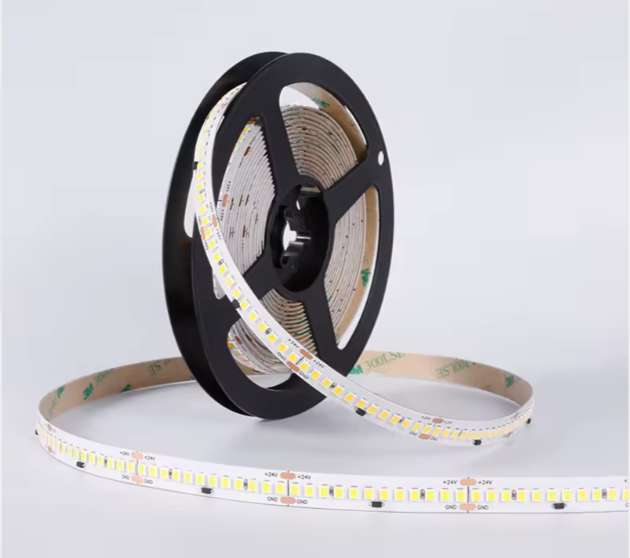
Skip to content
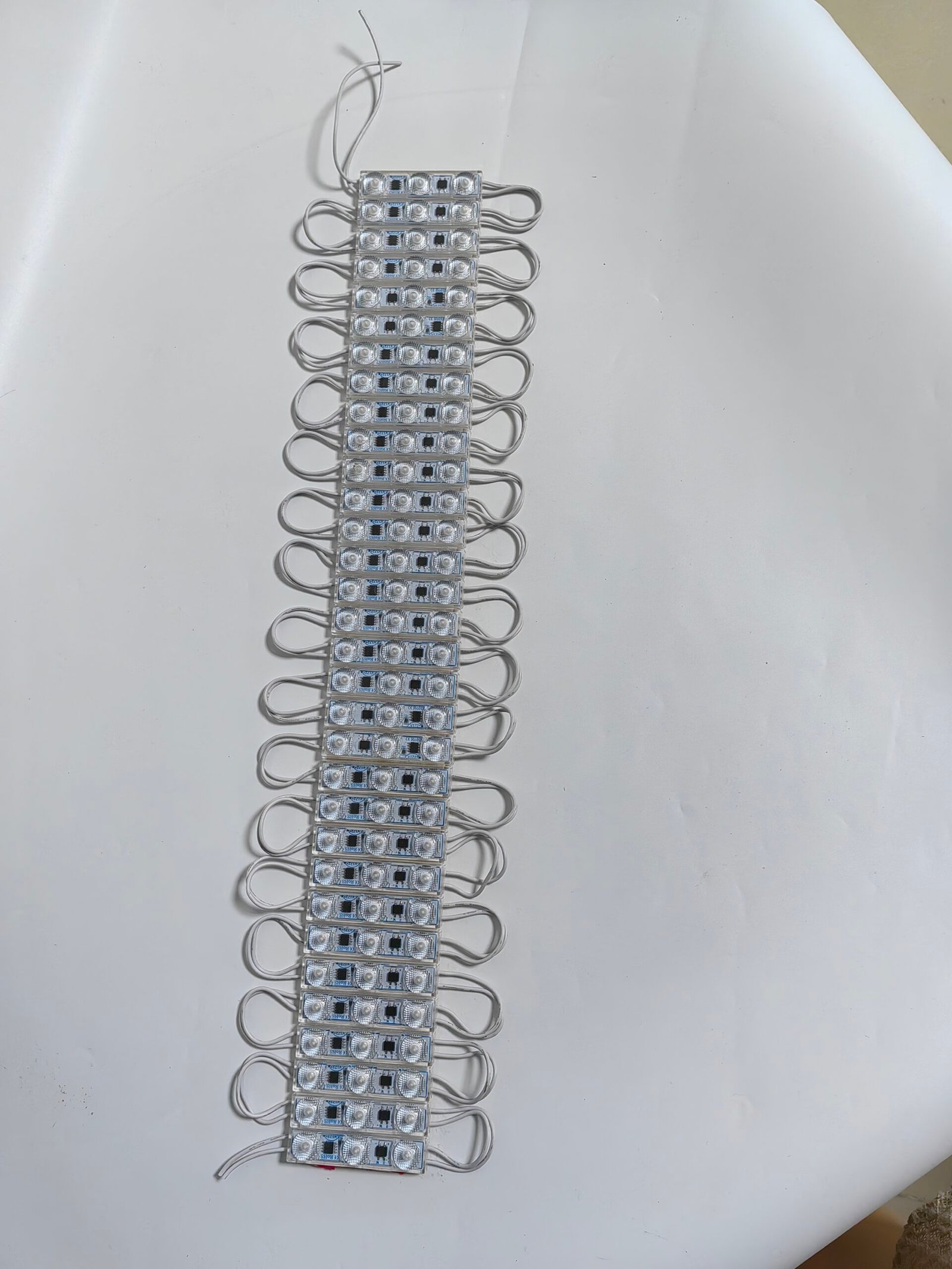
An LED light module is a standardized and modular component that uses light-emitting diodes (LEDs) as the light source and integrates electrical, mechanical and optical structures to independently perform specific lighting or luminous functions. Meanwhile, LED modules are the core components in modern lighting, display and decoration fields.
It is a standardized and modular component that integrates LED light beads, driving circuits, PCB boards, shells (optional), and optical components (optional). It is not a single LED light bead, but rather a “functional block” that can be directly used.


I : Core composition
- PCB board: Base plate, used to support all electronic components.
· Aluminum base plate: Core is metal aluminum, with excellent heat dissipation performance. It is used for high-power LED modules and can effectively extend the lifespan.
· Flexible FPC: Can be bent, used for irregular curved surfaces or flexible displays.
- LED Chips/Light Beads:
·They are the core component of the light source.
·According to packaging type: surface mount type, chip-on-board type, chip-scale package type, etc. Currently, the most common type is the surface mount type, which has a small size and high luminous efficiency.
·According to power: low power (such as 2835, 5730 surface mount), medium power, high power (such as 1W, 3W single light bead).
·According to color: single color, dual color, full color.
- Driving Circuit:
·Integrated onto the PCB, it converts the input power into a constant current or voltage suitable for LED operation.
·Key Components: Resistor, Capacitor, Constant Current Driving IC.
·This determines the electrical characteristics and reliability of the module.
- Shell/Lens:
·Secondary optical lens: Used to change the shape of the light spot (such as concentrating or diffusing) and the light distribution angle (such as 15°, 60°, 120°).
·PC/Silicone/Glass cover: Used for protection, dust prevention, water resistance, and to achieve a diffused soft light effect.
·Aluminum shell: Often used in high-power modules as a heat sink.
- Interface:
·Welding pins, terminal blocks, standard plugs, etc., facilitating electrical connections and assembly.
II. Main Types and Applications
- LED lighting modules:
·Features: Aim for high luminous efficiency, high color rendering, good heat dissipation and light distribution.
·Common forms:
·COB module: The light source is a surface light, without glare, with uniform light spots, widely used in downlights and spotlights.
·High-power integrated module: Each single unit has high power, used for floodlights and industrial lighting.
SMD surface mount module: Such as 5730 module, used for panel lights, lamp tubes, and ceiling lights.
·Linear light module: Long-shaped, used for wall washing lights, contour lighting, and linear light for non-main lighting designs.
·Applications: All general lighting fields such as home, commercial, industrial, and roads.
- Display-type LED modules:
·Features: Aim for high density, high refresh rate, high consistency, and ease of splicing.
·Common forms:
·LED display module: It is the “pixel unit” of LED large screens. Classified by pixel pitch (Pitch), such as P10, P3, P1.25, the smaller the value, the higher the resolution. There are various types including indoor, outdoor (with waterproof function), and rental.
·Lighting/Advertising module: Such as pixel point light sources, flexible neon light modules, used for building exteriors, creative displays, and advertising words.
·Applications: Outdoor advertising screens, stage backgrounds, monitoring and command centers, shopping mall billboards.
- Decorative/Ambient LED Modules:
·Features: Emphasize rich colors, dynamic changes, easy control, and small size (150).
·Common forms:
RGB/RGBW full-color modules: Each module contains red, green, blue (white) light beads, capable of achieving 16 million color variations.
·Flexible light strip modules: Install LED modules at certain intervals on flexible lines, allowing for arbitrary cutting.
·LED light engine/light board: Standardized replaceable light source modules (such as Zhaga standard), used to simplify lamp design.
·Applications: Building lighting, home atmosphere lighting, entertainment venues, festival decorations.
III. Key Performance Parameters
· Power: measured in watts, determines power consumption and total luminous flux.
· Luminous flux: measured in lumens, determines overall brightness.
· Luminous efficacy: lumens per watt, measures energy efficiency.
· Color temperature: measured in Kelvin, determines the coolness or warmth of the light (e.g., 3000K warm yellow, 6500K neutral white).
· Color rendering index: indicates the ability to reproduce colors, the higher the better (Ra > 80 is ideal).
· Working voltage/current: common DC 12V, 24V, or high-voltage AC/DC input. Current is mostly constant current drive.
Protection level: IP rating, such as IP20 (indoor), IP65 (dust and waterproof), IP68 (able to be submerged for a long time).
· Light attenuation: the degree of light output attenuation during the lifespan, directly related to heat dissipation design.
IV. Key Points for Selecting LED Modules
1.Clarify the application scenarios: Is it for lighting, display or decoration? Indoor or outdoor?
2. Determine the electrical parameters: Match the power supply voltage and driving method (constant voltage/constant current).
3. Pay attention to the light quality: Choose the appropriate brightness, color temperature, color rendering index and light distribution angle according to the needs.
4. Examine the heat dissipation design: Especially for large-power lighting modules, heat dissipation determines the lifespan.
5. Understand the brand and warranty: High-quality brands’ chips and drivers can ensure performance and stability.
6. Consider the installation method: Magnetic attachment, screw fixation, snap-on, adhesive application, etc.
V. Development Trends
- Intelligence: Integrated wireless control (Bluetooth, Wi-Fi, Zigbee), enabling dimming and color adjustment, as well as scene linkage.
- High-quality and healthy lighting: No flicker, low blue light, rhythmic lighting (simulating natural light changes).
- Mini/MicroLED: Used for ultra-high-definition display, with extremely small pixel spacing, and picture quality comparable to OLED.
- High integration and standardization: Such as light engines, integrated modules, simplifying the manufacturing of lamps.
- Higher light efficiency and reliability: Continuous improvement of performance through new materials and new processes.
Summary
LED modules are the fundamental “building blocks” for modern LED applications. Their modular nature significantly simplifies product design, production, and maintenance. Whether it’s a ceiling light that illuminates a room or a large advertising screen that lights up a city, behind each of them are numerous precise LED modules that are assembled together.


Why believe Exsun Lighting?
Exsun Lighting ensures every product undergoes rigorous quality control and meets international standards:
Quality Assurance: CE and RoHS certified for safety, durability, and environmental compliance.
Customization Options: Multiple color temperatures, lengths, and smart-control compatibility.
Expertise: Over a decade of LED experience delivering reliable products for professionalsworldwide.
Customer Support: From project planning to technical guidance, our team ensures smoothinstallation and operation.
Choosing Exsun means partnering with a trusted, forward-thinking lighting supplier.
Contact Exsun Lighting
Phone: +86 15819498823
Email: Janny@exsunlighting.com
WhatsApp: +8613318268466